Unavailable
Gloria is currently unavailable
We can no longer provide this arrangement through Sheet Music Stores. The listing stays online so you can learn about the piece and explore alternatives.
Try these next steps
- Discover similar sheet music curated for you below.
- Search for “Gloria” across our catalog.
About this arrangement
Choral SSA choir SKU: CF.BL1064 Composed by Noah Reese. Fold. OCTAVO. 8 pages. Duration 1 minute, 20 seconds. BriLee Music #BL1064. Published by BriLee Music (CF.BL1064). UPC: 680160911752. 6.875 x 10.5 inches. Key: D major. Latin. Traditional Latin.The Latin text used in this piece has been used in a wide variety of melodies as early as the second century. Taken from a hymn, it begins with the words the angels proclaimed when the shepherds heard of the birth of Christ. Canons are great for teaching part singing, and the canon in Gloria is based on the descending major scale, which can be hard to tune, especially for younger singers. Before the canon occurs each time, the melody is presented in unison, giving singers a chance to center themselves and lock into the tuning. Be intentional to give emphasis to the big beats in 6/8 (compound) meter, not the pulses, as this will provide more lilt and direction to the musical phrase. Dynamics play an important part in this piece, so it is important to really lean into them, especially the surprise at the end. Translation: Gloria in excelsis Deo Glory to God in the highest Glorificamus te We glorify you Adoramus te We adore you.The Latin text used in this piece has been used in a wide variety of melodies as early as the second century. Taken from a hymn, it begins with the wordsA the angels proclaimed when the shepherds heard of the birth of Christ. Canons are great for teaching part singing, and the canon in Gloria is based on the descending major scale, which can be hard to tune, especially for younger singers. Before the canon occurs each time, the melody is presented in unison, giving singers a chance to center themselves and lock into the tuning. Be intentional to give emphasis to the big beats in 6/8 (compound) meter, not the pulses, as this will provide more lilt and direction to the musical phrase. Dynamics play an important part in this piece, so it is important to really lean into them, especially the asurprisea at the end. Translation: Gloria in excelsis DeoA A A A A A Glory to God in the highest Glorificamus teA A A A A A A A A A A A We glorify you Adoramus teA A A A A A A A A A A A A A A We adore you.The Latin text used in this piece has been used in a wide variety of melodies as early as the second century. Taken from a hymn, it begins with the words the angels proclaimed when the shepherds heard of the birth of Christ. Canons are great for teaching part singing, and the canon in Gloria is based on the descending major scale, which can be hard to tune, especially for younger singers. Before the canon occurs each time, the melody is presented in unison, giving singers a chance to center themselves and lock into the tuning. Be intentional to give emphasis to the big beats in 6/8 (compound) meter, not the pulses, as this will provide more lilt and direction to the musical phrase. Dynamics play an important part in this piece, so it is important to really lean into them, especially the "surprise" at the end. Translation: Gloria in excelsis Deo Glory to God in the highest Glorificamus te We glorify you Adoramus te We adore you.The Latin text used in this piece has been used in a wide variety of melodies as early as the second century. Taken from a hymn, it begins with the words the angels proclaimed when the shepherds heard of the birth of Christ. Canons are great for teaching part singing, and the canon in Gloria is based on the descending major scale, which can be hard to tune, especially for younger singers. Before the canon occurs each time, the melody is presented in unison, giving singers a chance to center themselves and lock into the tuning. Be intentional to give emphasis to the big beats in 6/8 (compound) meter, not the pulses, as this will provide more lilt and direction to the musical phrase. Dynamics play an important part in this piece, so it is important to really lean into them, especially the "surprise" at the end. Translation: Gloria in excelsis Deo Glory to God in the highest Glorificamus te We glorify you Adoramus te We adore you.The Latin text used in this piece has been used in a wide variety of melodies as early as the second century. Taken from a hymn, it begins with the words the angels proclaimed when the shepherds heard of the birth of Christ.Canons are great for teaching part singing, and the canon in Gloria is based on the descending major scale, which can be hard to tune, especially for younger singers. Before the canon occurs each time, the melody is presented in unison, giving singers a chance to center themselves and lock into the tuning.Be intentional to give emphasis to the big beats in 6/8 (compound) meter, not the pulses, as this will provide more lilt and direction to the musical phrase.Dynamics play an important part in this piece, so it is important to really lean into them, especially the “surprise” at the end.Translation:Gloria in excelsis Deo Glory to God in the highestGlorificamus te We glorify youAdoramus te We adore you.
Related sheet music

O Come to the Stable - for SATB Choir


Gloria in E flat major
felix bartholdy mendelssohn

Freely Composed Organ Works. Chorale Partitas from Miscellaneous Sources
johann sebastian bach

Upon This Rock
bill & gloria gaither

Psallite Gloria - Festival edition
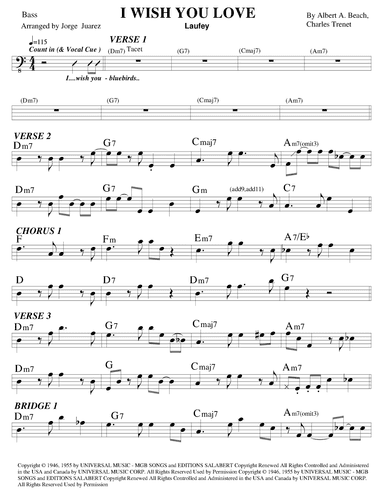
I Wish You Love (arr. Jorge Juárez)
charles trenet, gloria lynne, albert a. beach, jorge juárez

Gloria - Abba
For All We Know
coots, j. fred


Offertorium Gloria et Honore?
carl maria von weber
New · Grammar of Music
Understand the music behind every score
Grammar of Music is our new interactive music theory system. Every interval, chord and progression plays as you read, so you train your ear while you learn — and every score you pick up starts to make sense.
- Hear every concept, not just read it
- Chord dictionary, circle of fifths and more
- Guided courses from basics to harmony
No account needed to get started.